 PocketSEO
Not Every Traffic Dip Needs a Fix — Sometimes You Just Wait

Keval Shah @SEOKeval
Ecom SEO + AI SEO
Key Takeaway
Not every SEO traffic drop has an identifiable cause. Sometimes rankings dip despite clean technical health, no manual penalties, and a stable backlink profile. In these cases, the right response is to keep publishing content and building links rather than over-auditing. An ecommerce site documented by SEO consultant Keval Shah recovered to record traffic levels after months of consistent fundamentals, with no single fix responsible for the turnaround. If your core site health checks out, a 60-90 day patience window often outperforms reactive changes.
Why do organic traffic dips sometimes fix themselves?
Some SEO drops have no identifiable cause. No technical errors, no manual penalty, no algorithmic smoking gun. The site just dips, and no amount of auditing turns up a reason.
This is more common than most SEO guides admit. Google's ranking systems process signals continuously, and there are periods where a site's visibility fluctuates while the algorithm re-evaluates its authority, relevance, or trustworthiness. You won't always find a trigger in Search Console.
According to Google's own documentation on ranking systems, sites can experience ranking changes as Google recrawls and reassesses content quality over time — there's no instant feedback loop between your work and your rankings.
What actually happened with this ecommerce site?
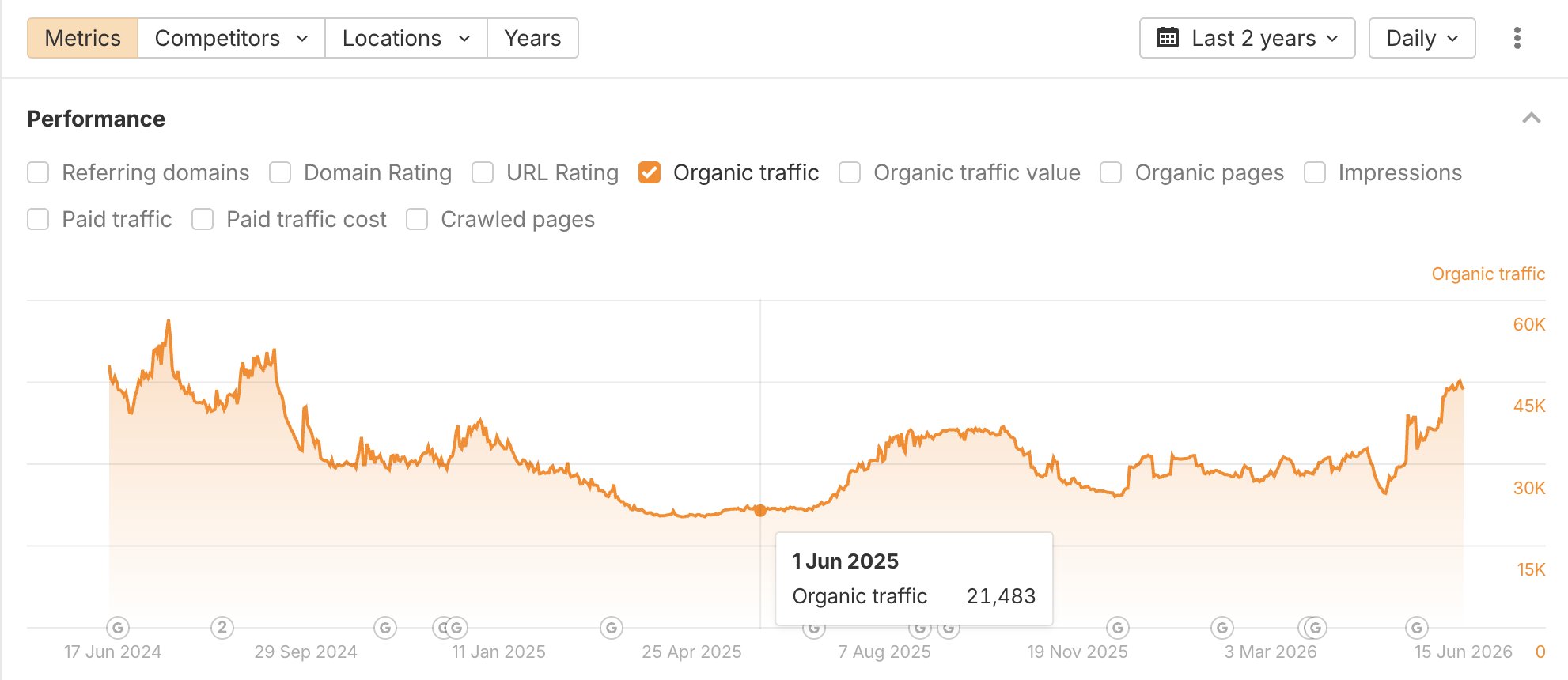
Keval Shah, an ecommerce SEO consultant, documented exactly this situation with a client he took on last summer. He ran a full technical audit, optimized product category pages, improved internal linking, published new blog content, and built backlinks. Traffic went up significantly.
Then it dropped back down.
He audited the site repeatedly. Nothing came up. No obvious cause, no clear fix.
So he kept doing the same things: publishing content that internally linked to category pages, and building high-quality backlinks. A few months later, rankings and traffic started climbing again. The site is now close to record organic traffic levels, ranking in the top 3 for its primary keywords.
No single fix caused the recovery. Consistent fundamentals did.
How do you tell a real problem from a temporary fluctuation?
Before you spiral into audit mode, check these first:
- Search Console coverage report — are pages still indexed?
- Manual actions — any penalties listed under Security & Manual Actions?
- Core Update timing — did the drop coincide with a confirmed Google update? Check Google's Search Status Dashboard.
- Crawl errors — are key pages returning 200 status codes?
- Backlink profile — any sudden loss of referring domains?
If none of these surface a problem, and the drop is under 20-25% with no other signals, you may be looking at normal volatility.
What should you do when you can't find the cause?
- Document the drop date and check against known Google updates
- Run a quick technical check (crawlability, indexing, manual actions)
- Confirm your top pages are still indexed and returning correct status codes
- If nothing flags, keep your core activities running: content publishing and link building
- Set a 60-90 day review window before escalating concern
Stopping your SEO work because traffic dipped is the worst response. The sites that recover fastest are the ones that kept publishing and earning links through the dip.
When is waiting actually the right call?
Waiting makes sense when:
- No technical issues are present
- No manual action exists
- The drop didn't coincide with a major content or site change
- Your backlink profile is stable
Google doesn't rank sites in real time. Links need to be recrawled and processed. Content needs to be re-evaluated against competing pages. That takes time, and the timeline is Google's, not yours.
The most durable SEO results come from sustained effort over months, not reactive overhauls every time rankings shift.
 Get the weekly SEO digest