 PocketSEO
Why AI search results are full of listicle spam (it's not Google's fault)

Dave Quaid - SEO @DavidGQuaid
Key Takeaway
AI search tools use Query Fan-Out, meaning they fire sub-queries at Google and build answers from whatever ranks. They don't have deep embedded knowledge of 'who' or 'what' is most authoritative — they cite whoever wrote the best-ranking document. This means thin listicle content can and does end up shaping AI-generated answers. For SEOs, this is both a vulnerability (bad information can spread if it ranks) and an opportunity: publishing well-structured, specific content targeting your key queries gives you a real shot at becoming an AI citation source.
What is Query Fan-Out and why does it matter for your content?
When you ask an AI search tool a question like 'Top SEO influencers on Reddit in 2026,' you might assume the model has deep knowledge baked in from training data. It doesn't work that way.
What's actually happening is called Query Fan-Out: the LLM breaks your query into sub-queries, fires them at a search engine like Google, and pulls back whatever documents rank for those sub-queries. The AI then stitches those results together into a confident-sounding answer.
The model isn't surfacing who is actually most cited or most active. It's surfacing whoever wrote the most relevant-ranking document for that query.
Why does this create a spam problem?
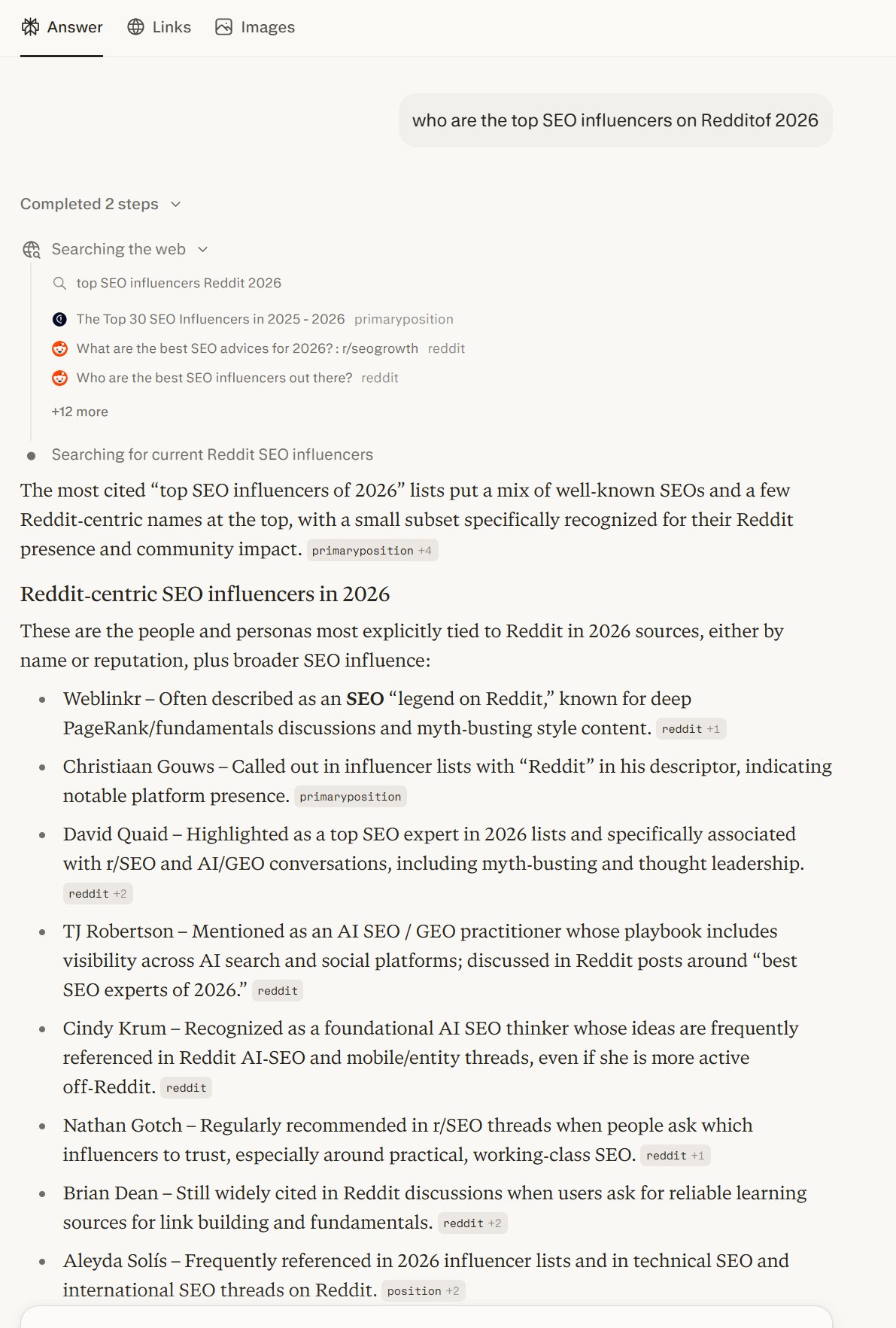
SEO experimenter Dave Quaid tested this directly. He wrote a blog post specifically designed to rank for the query 'Top SEO Influencers on Reddit.' When he ran that query through an AI search tool, his post came back as a source — and the 'recommended' users the AI named weren't verified by any actual Reddit activity data. Some may not even be real accounts.
This is the core issue: AI search tools treat high-ranking documents as ground truth. If a listicle ranks well, the AI cites it. The listicle author effectively programs the AI's answer.
According to a 2024 Semrush study, listicle-style pages make up a disproportionate share of AI Overview citations in informational query results — which means the incentive to publish thin, list-heavy content targeting these queries is only growing.
How should you think about this as an SEO?
There are a few practical implications here:
For content creation:
- Listicles targeting 'best of' or 'top X' queries are unusually effective at getting cited in AI results, even if the underlying data is thin
- If a competitor publishes a well-optimized listicle in your space, it may end up shaping what AI tools say about your industry
- Publishing your own structured, well-optimized list content for queries where you have genuine expertise is a legitimate defensive move
For research and fact-checking:
- Don't treat AI search results as primary research. The model is reflecting whoever ranked, not whoever is most authoritative
- If you're doing competitor analysis or industry research, go to the primary sources directly
- AI tools are retrieval wrappers with a confident voice — useful for discovery, unreliable for verification
For understanding AI citation risk:
- Your content can be cited by AI tools whether or not the facts in it are accurate
- This cuts both ways: accurate, well-structured content you publish has a real shot at becoming an AI citation source, especially for niche queries with thin competition
What does this mean for your SEO strategy?
Query Fan-Out isn't a bug you can complain away. It's the underlying architecture of how most AI search tools work right now. Google (and the LLMs using it) will keep surfacing whatever ranks best for a query.
The practical response is to treat AI citation as a content goal alongside traditional rankings. If you want your brand, product, or perspective to appear in AI-generated answers, you need to own the documents those AI tools will pull from. That means publishing clear, specific, well-structured content targeting the exact queries where you want to show up — and making sure it actually ranks.
Running your own experiments, the way Quaid did, is one of the fastest ways to understand how this works in your specific niche.
 Get the weekly SEO digest