 PocketSEO
How to Rank for Competitor Brand Names with Alternative Pages

Kai Cromwell @KaiCromwell
Shopify SEO
Key Takeaway
Create comprehensive competitor alternative pages positioning your product as the #1 option alongside other legitimate alternatives. These pages rank well for branded competitor terms because they match search intent perfectly. Include comparison tables, migration guides, and customer testimonials to convert high-intent traffic actively looking for alternatives to established competitors.
Why do competitor alternative pages rank so well?
When someone searches "[Brand Name] alternatives," they're already looking for options. Google knows this search intent and favors comprehensive comparison pages over the original brand's homepage. These pages often rank in positions 1-3 because they directly answer what searchers want.
According to Ahrefs, 68% of all clicks go to the top 3 organic search results, which is why alternative pages that secure these positions see significant traffic gains.
The psychology is simple: people searching for alternatives are dissatisfied with the current option. They're actively shopping around, making them high-intent prospects for your business.
How do you create competitor alternative pages that rank?
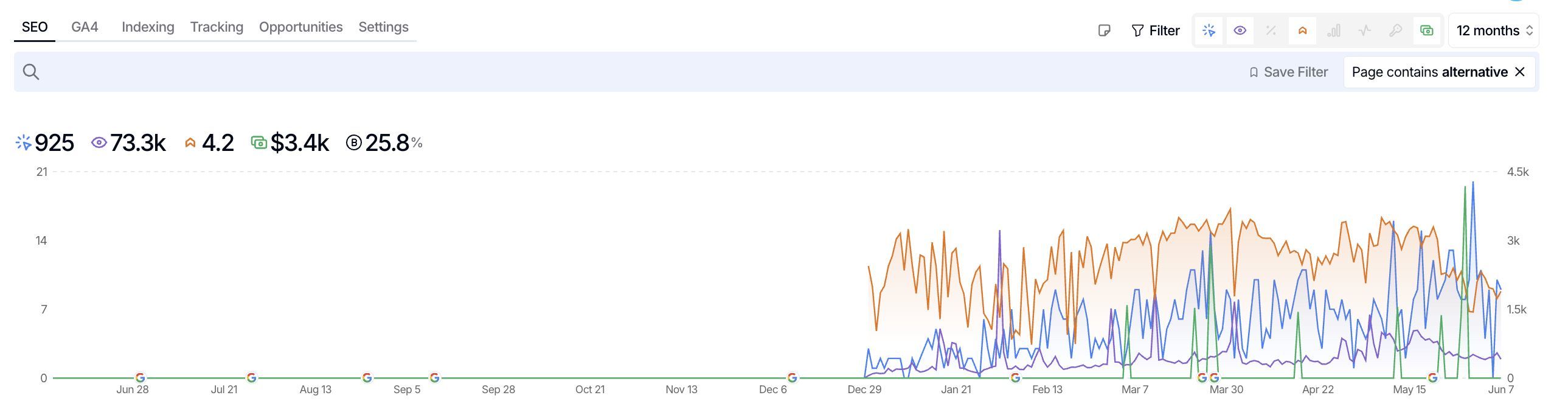
Start by identifying your top 3-5 direct competitors using tools like Ahrefs or SEMrush. Look for competitors with strong brand recognition but room for improvement in their offering.
Create a page titled "[Competitor Name] Alternatives: Top X Options for [Year]". Structure it with:
- Brief overview of why people seek alternatives to [Competitor]
- Your product as Alternative #1 with detailed features
- 4-6 other legitimate alternatives as #2-7
- Comparison table with pricing and key features
- FAQ section addressing common switching concerns
Be genuinely helpful. Don't bash the competitor - explain what different users might prefer instead. This builds trust and reduces bounce rate.
What makes these pages actually convert visitors?
Position your solution as the top alternative, but be subtle. Use phrases like "best overall alternative" or "most comprehensive solution" rather than obvious self-promotion.
Include specific migration guides: "How to switch from [Competitor] to [Your Product]" sections perform exceptionally well. Add customer testimonials from people who actually made the switch.
Make your comparison criteria favor your strengths. If you're cheaper, emphasize cost comparison. If you have better features, create detailed feature matrices.
How do you get these pages to rank quickly?
Build 5-10 relevant backlinks to your alternatives page. Reach out to industry blogs, participate in tool comparison roundups, or guest post about "choosing the right [tool category]."
Optimize for search intent by including related keywords like:
- "[Competitor] vs [your brand]"
- "[Competitor] pricing alternatives"
- "best [tool category] instead of [competitor]"
Update the page quarterly with new alternatives, pricing changes, and fresh testimonials. Google rewards fresh, comprehensive content in competitive spaces.
Track rankings for "[competitor name] alternative" and "[competitor name] competitors" keywords. Most pages see initial rankings within 2-4 weeks with proper optimization and link building.
 Get the weekly SEO digest