 PocketSEO
Skip Technical SEO: Category Pages Drive $4.8k Revenue Instead

Kai Cromwell @KaiCromwell
Shopify SEO
Key Takeaway
Ecommerce stores should prioritize category page optimization over technical SEO for faster revenue growth. One brand generated $4.8k in additional revenue by optimizing 30 category pages while ignoring technical fixes, backlinks, and other SEO activities entirely.
Why do ecommerce stores obsess over technical SEO first?
Most SEO advice pushes technical fixes as priority one. Fix your crawlability, optimize Core Web Vitals, clean up your site architecture. But for ecommerce stores, this approach wastes time and delays revenue.
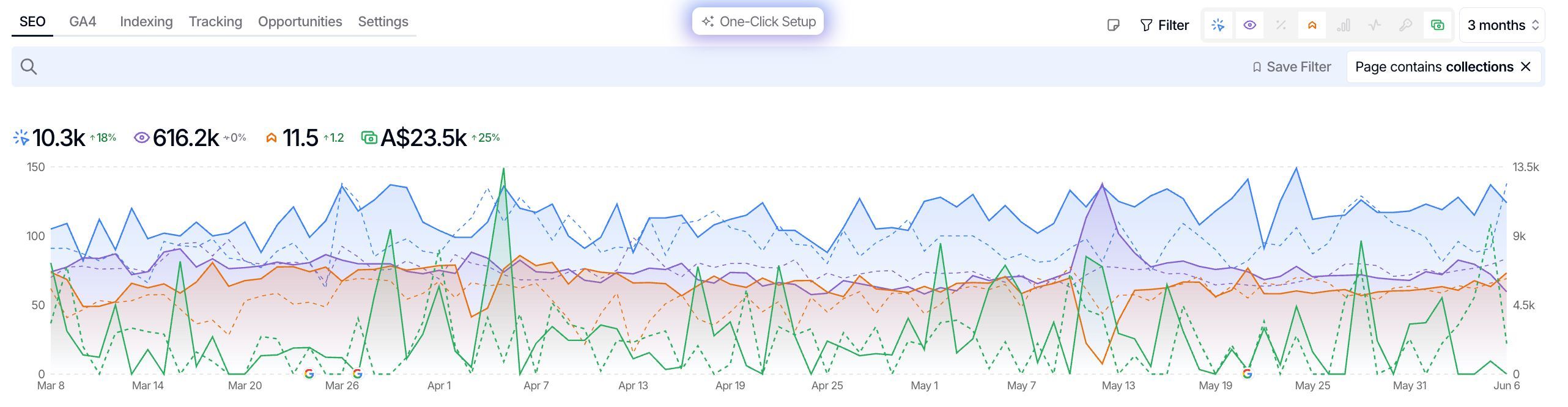
A Shopify store proved this wrong by ignoring technical SEO entirely and focusing on category pages instead. Result: $4.8k in additional revenue from 30 optimized collections alone.
What makes category pages more valuable than technical fixes?
Category pages sit at the perfect intersection of search volume and commercial intent.
According to Ahrefs, category pages receive 3x more organic traffic than product pages on average for ecommerce sites. When someone searches "wireless headphones" or "running shoes for women," they're ready to browse and buy. These pages capture multiple product variations under one URL, making them ranking powerhouses.
Technical SEO fixes help search engines crawl your site better, but they don't directly drive purchases. A perfectly crawlable site with weak category pages still won't convert searchers into buyers.
How do you optimize category pages for maximum impact?
Start with keyword research focused on your product categories. Look for terms with 1,000+ monthly searches and clear commercial intent. Tools like Ahrefs or SEMrush show you exactly what your competitors rank for.
Write unique descriptions for each category page. Skip the generic manufacturer copy. Include your target keywords naturally in the first 150 words. Add helpful filters and sorting options to improve user experience.
Structure your internal linking to flow from homepage to categories to individual products. This helps search engines understand your site hierarchy and passes authority to your money pages.
What results can you expect from category page optimization?
The case study brand optimized 30 collections without touching technical elements. No new backlinks, no site speed improvements, no schema markup. Just better category pages.
This narrow focus delivered $4.8k in additional revenue. The lesson: perfect execution on high-impact pages beats scattered optimization across multiple SEO areas.
Should you ignore technical SEO forever?
Not exactly. Technical issues can block your growth once you hit certain traffic levels. But for most ecommerce stores under 10,000 monthly visitors, category page optimization delivers faster, more measurable results.
Start where the money is. Optimize your category pages first, then address technical issues as they become actual barriers to growth.
 Get the weekly SEO digest