 PocketSEO
Skip blog content: Scale product category pages for ecommerce SEO wins

Keval Shah @SEOKeval
Ecom SEO + AI SEO
Key Takeaway
Ecommerce brands generate more revenue by creating hyper-specific product category pages instead of blog content. Rather than broad categories like "jewelry," build separate pages for "mens gold chains" and "silver bracelets for women" targeting keywords with 500-2,000 monthly searches and low competition. Add 200-400 words of optimized content below product grids covering material benefits, style guides, and care instructions. This strategy captures high-intent buyers at the moment they're ready to purchase, with one jewelry brand achieving first-page rankings for 8 out of 10 new category pages within six months.
Why do most ecommerce brands waste time on blog content?
While SEO agencies push endless blog posts, smart ecommerce brands focus on product category pages. A jewelry brand proved this by skipping blogs entirely and building hyper-specific category pages instead.
What category page strategy actually works for ecommerce SEO?
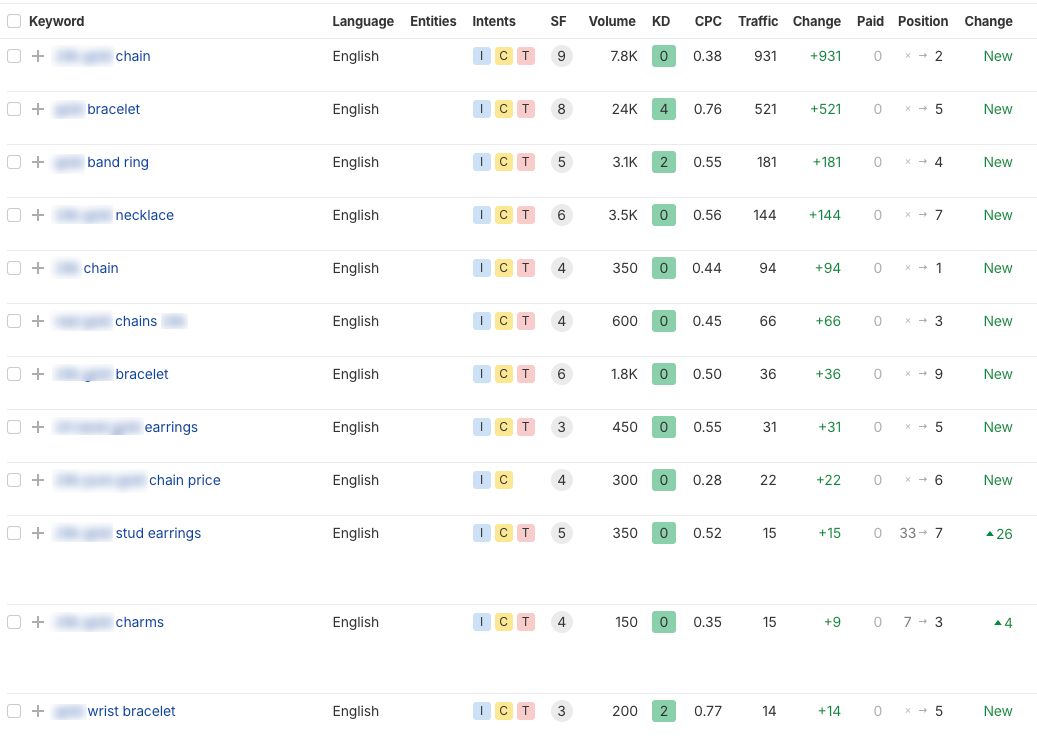
Instead of generic categories like "Bracelets" or "Rings," create pages for specific product variations:
- Silver chains
- Mens gold chains
- Gold bracelets for men
- Silver bracelets for women
- Rose gold wedding rings
- Vintage diamond earrings
These longer-tail keywords have lower competition but higher purchase intent.
How do you build category pages that rank in search results?
1. Research hyper-specific keywords
Use tools like Ahrefs or SEMrush to find product keywords with:
- 500-2,000 monthly searches
- Low competition (KD under 30)
- High commercial intent
2. Create dedicated pages
Build separate category pages for each specific product type. Don't lump "gold jewelry" and "silver jewelry" together.
3. Add optimized content below products
Write 200-400 words about the product category below your product grid:
- Material benefits (why gold vs silver)
- Style guides and occasions
- Care instructions
- Size and fit information
4. Update your navigation
Add new category pages to your main menu. This helps users find them and signals importance to search engines.
5. Build targeted backlinks
Reach out to fashion blogs, jewelry forums, or gift guides. A few quality links per page makes a difference.
What results can you expect from category page optimization?
The jewelry brand saw 8 out of 10 new category pages hit first-page rankings within 6 months. Their organic revenue jumped significantly because these pages target buyers, not browsers.
Why does category page optimization beat blog content for ecommerce?
Blog posts rarely drive direct sales. Someone reading "How to clean silver jewelry" might not buy anything. But someone searching "mens silver chains" is ready to purchase.
Category pages capture high-intent traffic at the exact moment people want to buy. That's why they convert better and generate more revenue than blog content for most ecommerce sites.
 Get the weekly SEO digest