 PocketSEO
Track SEO Changes with AI-Powered Experiment Monitoring
Reviewed Jul 2026
Key Takeaway
Log every SEO change with a hypothesis and test one variable at a time, so you learn which tactics actually move rankings instead of guessing.
Why SEO Experiments Beat Guesswork
Most SEO changes happen in a vacuum.
You update title tags, revamp content, fix technical issues — then wait and hope. But without proper tracking, you never know which changes actually moved the needle.
SEO experiments solve this by creating a feedback loop between your changes and measurable results.
Setting Up Your SEO Experiment System
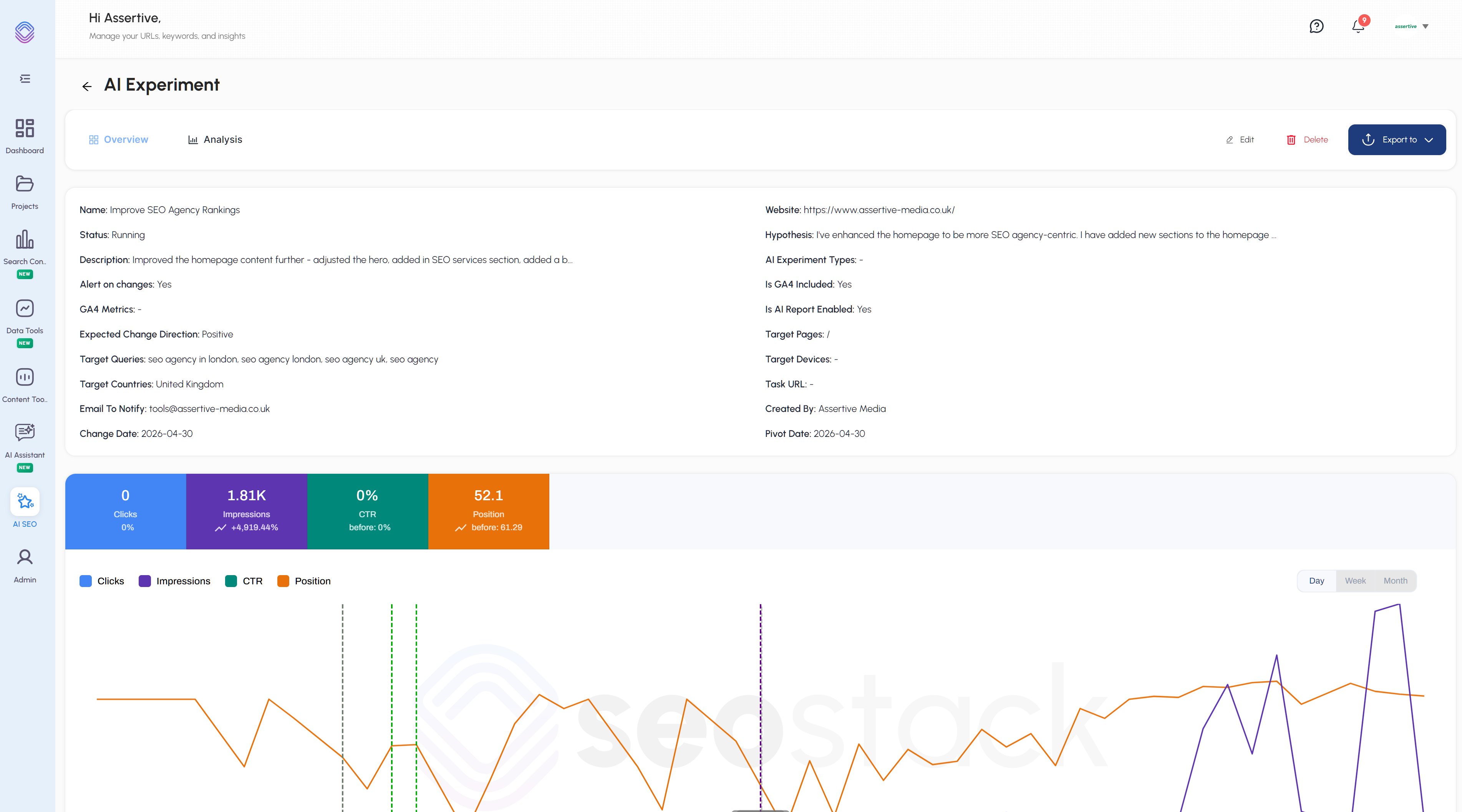
Step 1: Document Every Change
Before making any SEO modification, log it with:
- Exact pages modified
- Type of change (content, technical, UX)
- Date implemented
- Hypothesis for expected impact
Use tools like SEO Stack for annotations, or create a simple spreadsheet.
Step 2: Define Your Tracking Metrics
Monitor these key data points from Google Search Console:
- Query counts — total search terms triggering your pages
- Query relevance — how well your content matches search intent
- Primary keyword rankings — your main target terms
- Long-tail rankings — secondary and supporting keywords
- Average position changes — overall ranking movement
Supplement with Google Analytics 4 behavioral data like bounce rate, time on page, and conversion metrics.
Step 3: Use AI for Pattern Recognition
AI tools excel at spotting patterns across multiple data sources. Set up automated analysis that:
- Pulls daily GSC and GA4 data
- Correlates ranking changes with your logged modifications
- Identifies which types of changes produce the best results
- Generates insights about user behavior shifts
Making Experiments Actionable
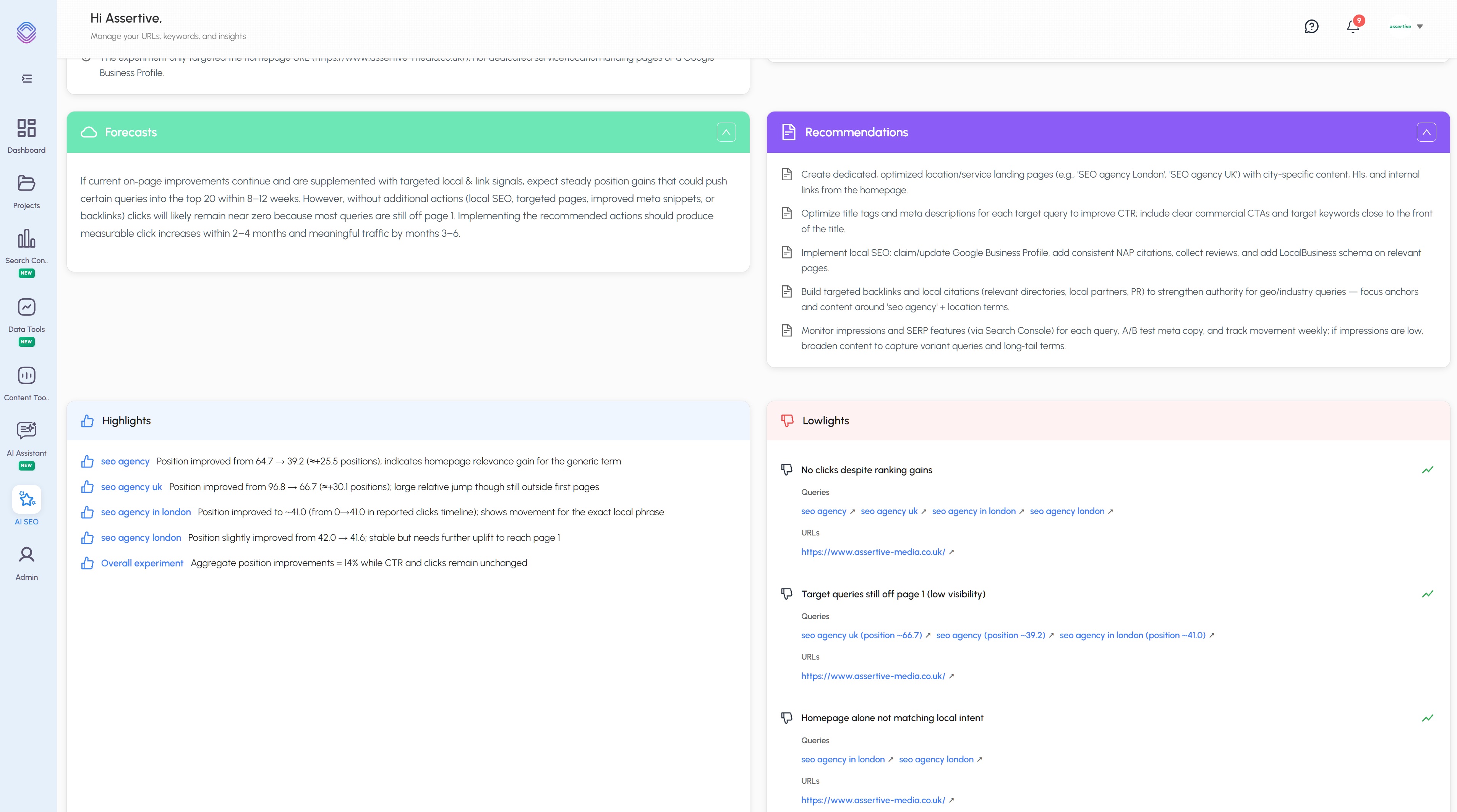
Run parallel tests: Don't change everything at once. Test one variable per page group so you can isolate what works.
Set notification triggers: Get Slack or email alerts when significant ranking changes occur. This lets you react quickly to both positive and negative results.
Scale successful changes: When an experiment shows clear positive results, apply the same approach to similar pages across your site.
The Real Power: Compound Learning
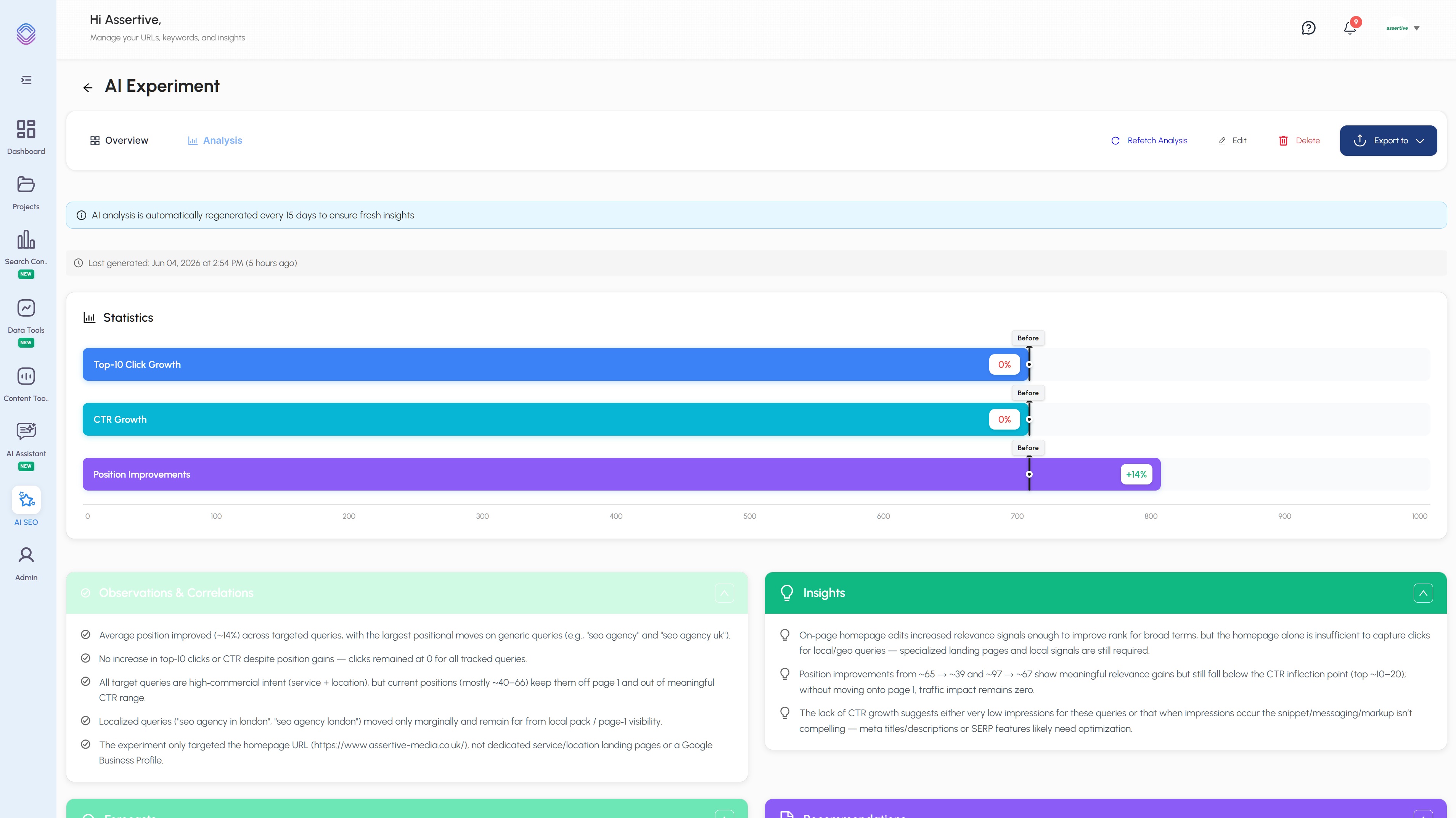
Each experiment teaches you something specific about your site and audience. Over time, you build a playbook of proven tactics that work for your particular niche and technical setup.
This beats following generic SEO advice because you're optimizing based on your actual data, not someone else's case study.
Quick Win Implementation
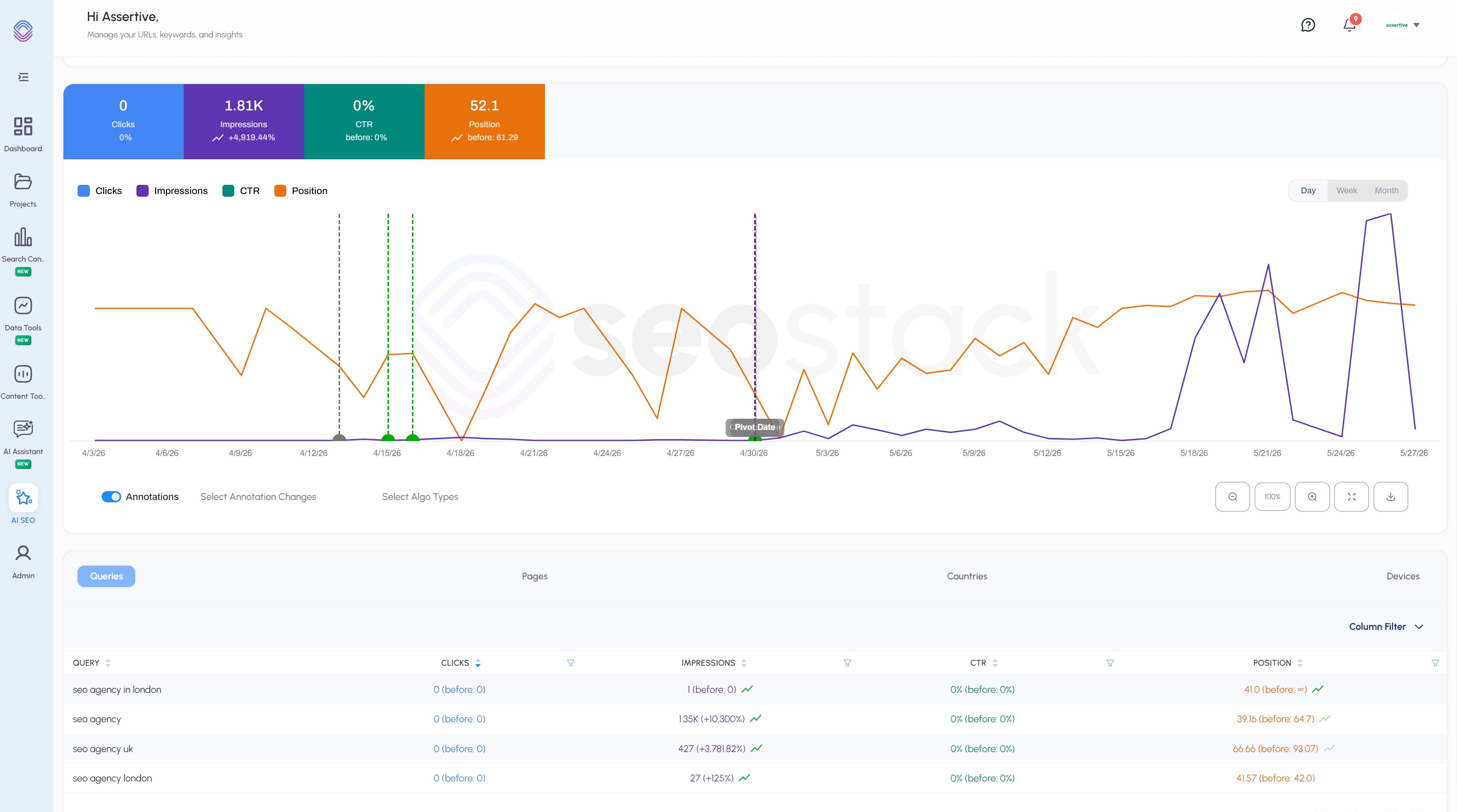
Start simple: Pick 10 similar pages, make one type of change to 5 of them, and track ranking differences over 30 days. Use free tools like Google Search Console and Google Analytics 4 for basic tracking.
Once you see the value, invest in more sophisticated tracking and AI analysis tools.
Want the full playbook? Read our guide on Google Search Console: Setup to Your First SEO Win (20-Minute Guide).