 PocketSEO
Find New Top 3 Rankings to Unlock More Traffic
Reviewed Jul 2026
Key Takeaway
Track new top 3 rankings as signals for topic expansion opportunities. When you rank highly for one keyword, find related terms with overlapping search intent to scale traffic faster. Use internal links, PAA optimization, and strategic H2s to push pages from positions 4-10 into the top 3.
Why should you track new top 3 rankings?
When you break into Google's top 3 for a keyword, you've proven your content can compete at the highest level.
According to Backlinko, pages ranking in the top 3 positions get 75.1% of all clicks for that keyword. This signals an opportunity to expand around that topic and capture related searches.
New top 3 rankings are goldmines because they show Google trusts your content for that topic cluster. You can leverage this trust to rank for similar keywords much faster than starting from scratch.
How do you identify overlapping keyword opportunities?
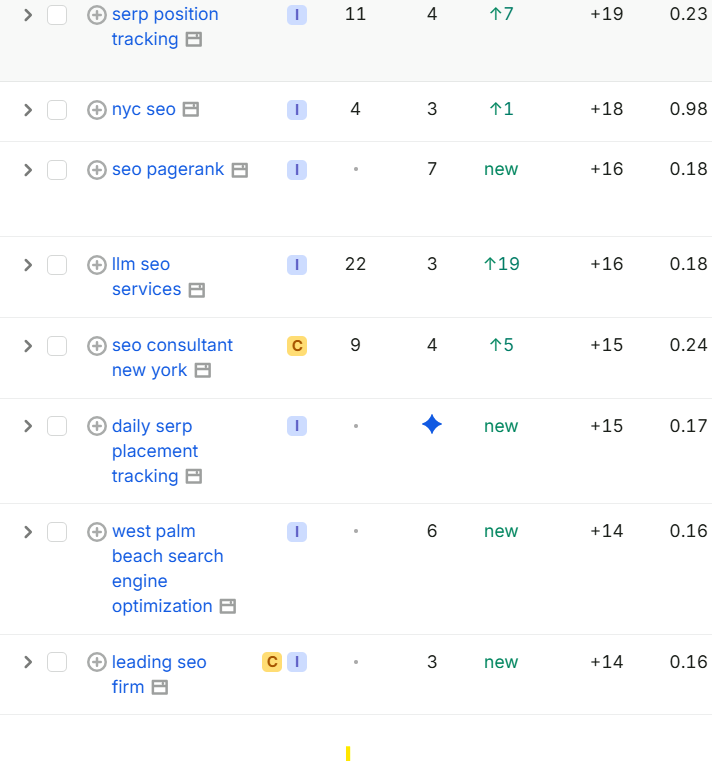
Once you spot a new top 3 ranking, look for related keywords that share the same search intent:
- Check the "Related searches" section at the bottom of Google results
- Use tools like Semrush or Ahrefs to find keyword variations
- Look at what competitors in positions 4-10 are targeting
- Mine Google's "People Also Ask" boxes for content gaps
The key is finding keywords where you can "walk into" the top 3 because Google already sees you as topically relevant.
What tactics work best for pages ranking 4-10?
For pages stuck in positions 4-10, you're close but need that final push:
Internal linking: Add contextual links from your highest-authority pages. Use exact-match or partial-match anchor text pointing to your target page.
PAA optimization: Answer "People Also Ask" questions within your content. This builds topical authority and helps Google understand your expertise.
Strategic H2 additions: Add H2 subheadings that target related long-tail keywords. This expands your content's keyword coverage without diluting focus.
Why is Semrush better than Search Console for this?
Google Search Console shows you ranking data, but Semrush reveals the strategic context you need:
- Keyword difficulty scores help prioritize opportunities
- Competitor analysis shows who you're competing against
- Related keyword suggestions reveal content gaps
- Historical ranking data shows momentum trends
Search Console tells you what happened. Semrush tells you what to do next.
Want the full playbook? Read our guide on 5 SaaS Page Types That Actually Drive Organic Traffic.