 PocketSEO
Test Channel Indexing Before Creating Multi-Platform SEO Content
Reviewed Jul 2026
Key Takeaway
Before creating content across multiple platforms for SEO, test whether Google actually indexes each channel using the site: operator with your profile URL. Well-indexed platforms show your profile and recent posts in search results within 24-48 hours, while poorly indexed ones may only display your main profile or take weeks to appear. This simple validation step prevents wasting months creating content that Google never discovers, since the search engine increasingly pulls results from social platforms and non-traditional sites, but only when it can properly crawl and index that content.
What should you know about the multi-platform SEO reality check?
Before you dive headfirst into creating content across every social platform and owned channel, pause.
According to HubSpot, 64% of marketers actively invest time in search engine optimization, making it crucial to ensure your chosen platforms actually contribute to search visibility. That shiny new "search everywhere" strategy could backfire if you skip one crucial step: testing whether Google actually indexes your chosen platforms.
How do you perform the simple indexing test?
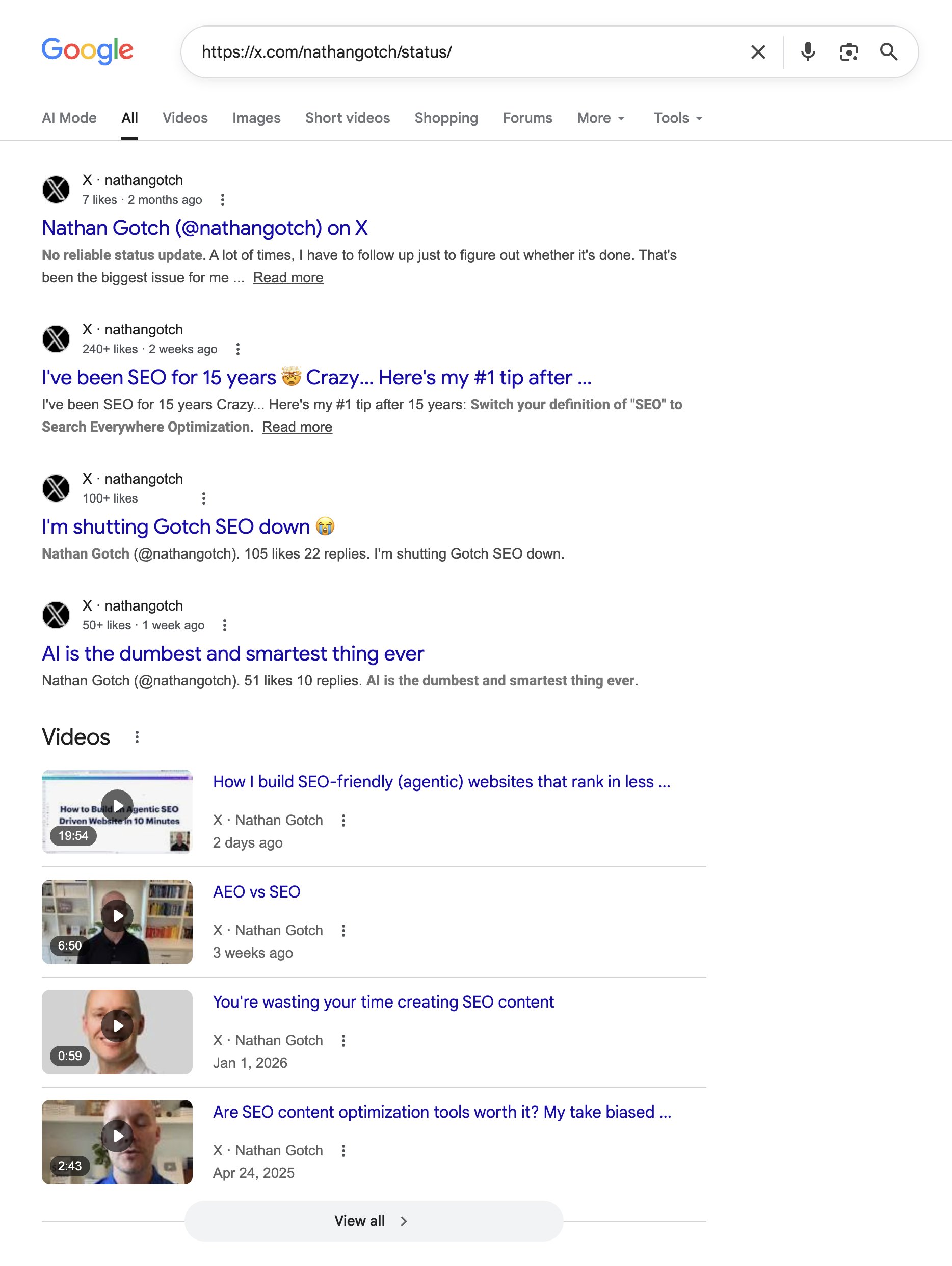
Here's how to validate any platform before investing serious content creation time:
- Grab the raw URL of the profile or channel you plan to use
- Search that exact URL in Google using the site: operator
- Check the results — does Google show your profile and recent posts?
What does good indexing actually look like?
When Google indexes a platform well, you'll see:
- Your profile appears in search results
- Recent posts show up individually
- Content appears within 24-48 hours of posting
- Platform-specific features (like LinkedIn articles) get indexed separately
What are the red flags you should avoid?
Some platforms have terrible Google visibility:
- No search results for your profile URL
- Only your main profile shows up, never individual posts
- Content takes weeks to appear in search
- Platform blocks Google's crawlers entirely
What is the green light strategy for content creation?
Once you confirm good indexing, go all-in on that channel. Create content around your core expertise consistently. Google treats well-indexed platforms as legitimate content sources, which means your posts can rank for relevant searches.
Why does this indexing approach matter right now?
Google increasingly pulls results from social platforms, forums, and non-traditional websites. But this only works if Google can actually see and index that content. Testing first saves you from wasting months creating content that never gets discovered.
Don't assume every platform works the same way. Test each one individually before committing your content strategy.
Want the full playbook? Read our guide on Google Search Console: Setup to Your First SEO Win (20-Minute Guide).