 PocketSEO
Build AI Agents That Actually Improve Your SEO Rankings
Create automated systems that monitor performance and deliver insights you can act on immediately.
Last updated: June 2026

Daniel Foley Carter @foley_seo on Twitter/X
Jun 4, 2026 · 18d ago
Updated June 2026
What Is an AI SEO Automation Agent?
An AI SEO automation agent is a custom-built system that connects to your SEO tools and automatically analyzes your website's performance. Instead of manually checking rankings, indexing status, and backlinks every day, the AI agent does it for you and delivers a comprehensive report.
This isn't about replacing SEO expertise—it's about speeding up the analysis process so you can focus on strategy and implementation rather than data gathering.
Why Build Your Own SEO AI Agent?
Most SEO professionals spend 2-3 hours daily just collecting and analyzing data from different tools. An AI agent can compress this into a 5-minute review of an automated report.
Here's what a properly configured AI SEO agent can do:
- Track daily ranking changes and identify significant movements
- Monitor page indexing status and catch crawling issues early
- Analyze performance of key service pages and content
- Report on new and lost search queries
- Identify content in growth phases vs. content experiencing decay
- Track new and lost referring domains and backlinks
- Monitor the impact of SEO changes and annotations
The key advantage is consistency. Your agent runs the same analysis every day, catches issues immediately, and never misses important changes that might slip through manual monitoring.
Required Tools and Infrastructure
Core Components
VPS or Local Machine: You need a server that runs 24/7 for daily automation. A $20/month VPS works perfectly, or you can run it locally if your computer stays on.
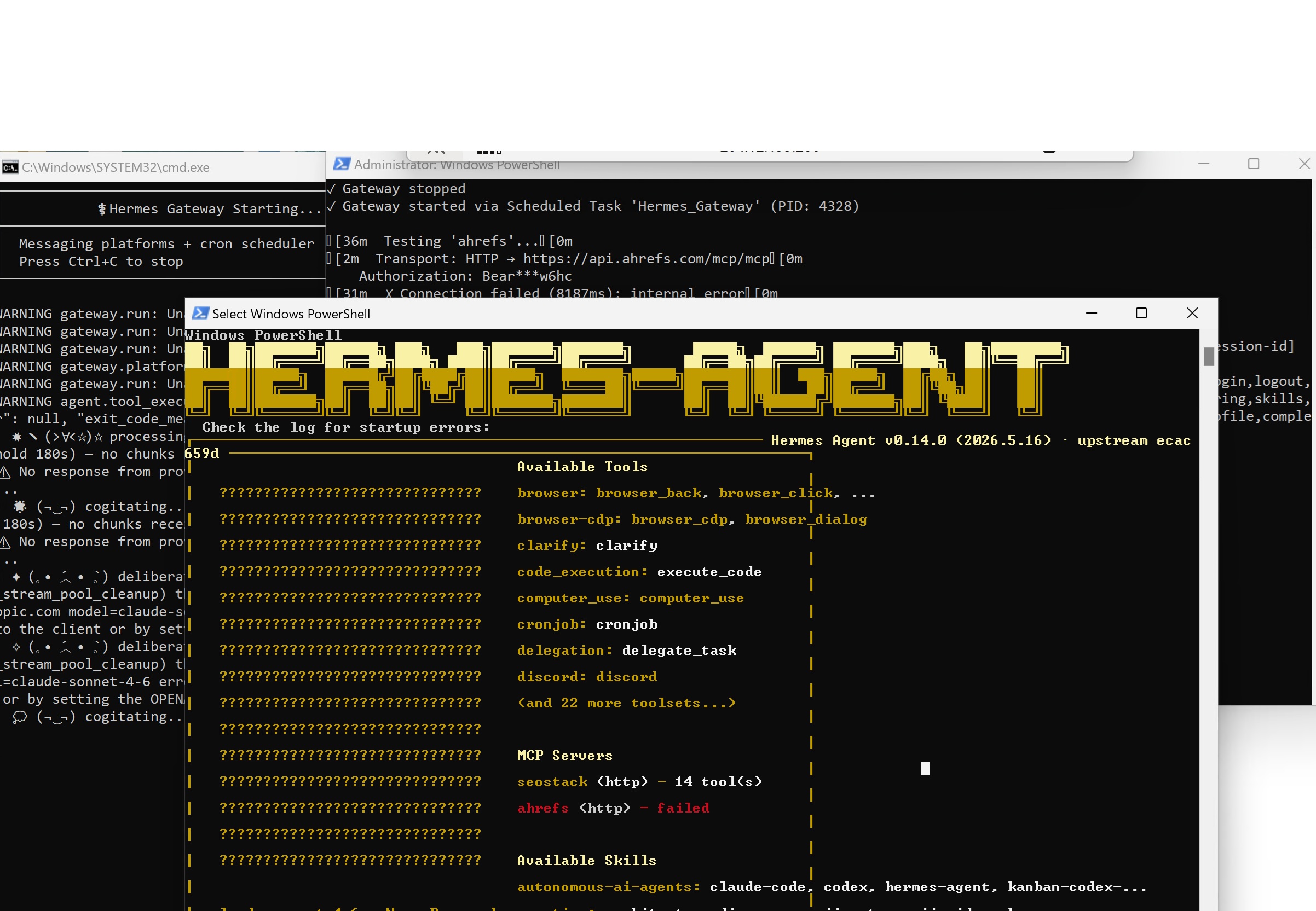
Hermes AI Framework: This provides the foundation for building AI agents. It runs efficiently on basic hardware and connects easily to external APIs.
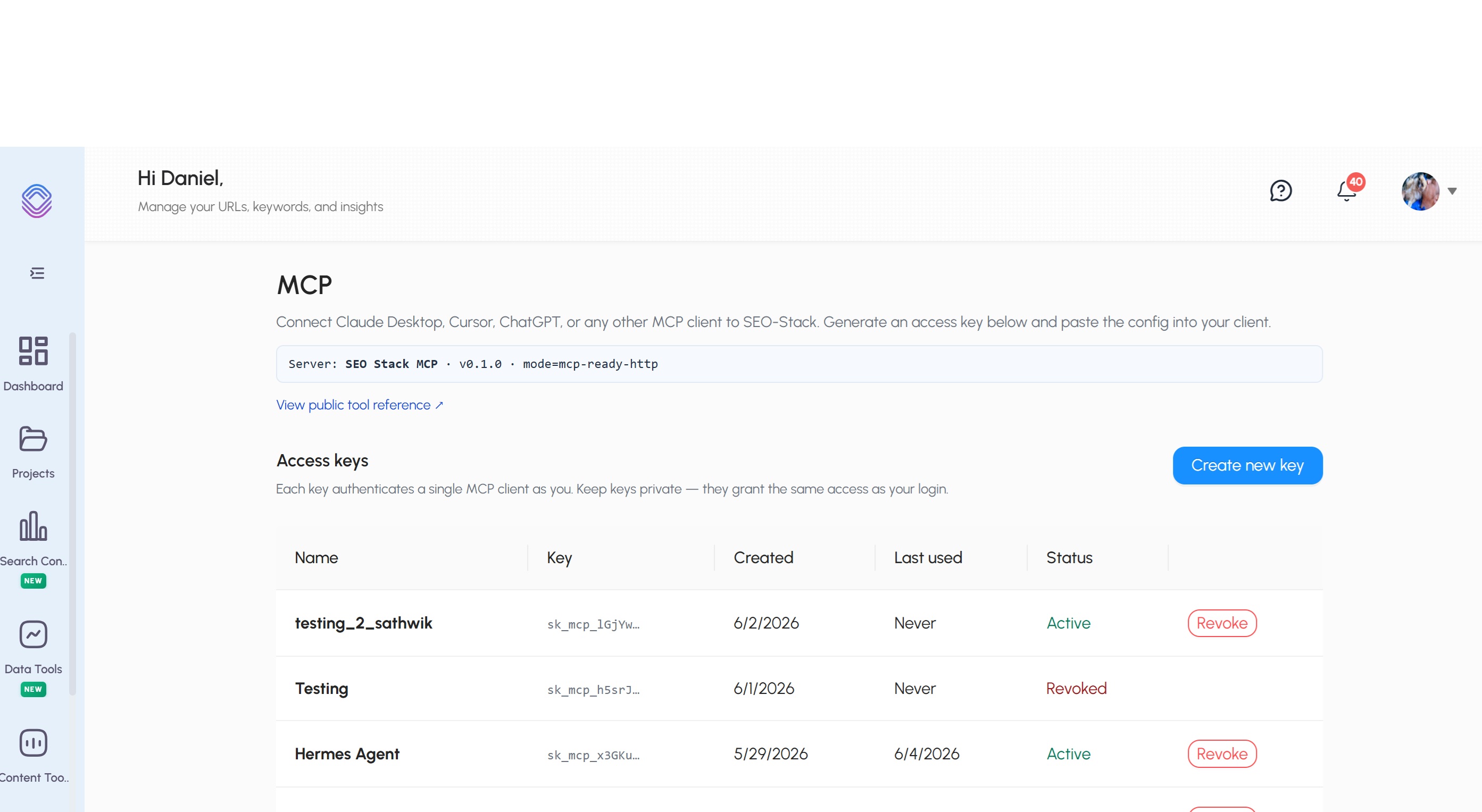
SEO Stack MCP: This is your data connector that pulls information from Google Search Console and other SEO tools. Plans start at $20/month.
Ahrefs Subscription: For backlink data, keyword tracking, and competitive analysis. Pricing varies based on your needs.
AI Model Access: Claude Sonnet via Open Router is recommended for its analytical capabilities. Budget around $20-50/month depending on usage.
Total Monthly Cost
- VPS: $20
- SEO Stack: $20
- Ahrefs: $99+ (varies by plan)
- AI Model: $20-50
- Total: $159-189/month
Setting Up Your AI SEO Agent
Step 1: Server Preparation
Set up a VPS with Ubuntu or run WSL2 on Windows. Install the required dependencies:
sudo apt update
sudo apt install python3 python3-pip git
pip3 install hermes-ai seo-stack-connector
Step 2: Configure SEO Stack Integration
Connect your SEO Stack account and configure access to your Google Search Console data:
- Log into SEO Stack and generate an API key
- Connect your Google Search Console properties
- Set up data export permissions
- Test the connection to ensure data flows properly
Step 3: AI Agent Configuration
Create your agent's personality and reporting structure. Define what metrics matter most for your business:
- Primary pages to monitor (service pages, top content)
- Ranking threshold changes that trigger alerts
- Indexing issues that need immediate attention
- Backlink quality thresholds
- Content performance benchmarks
Step 4: Daily Automation Setup
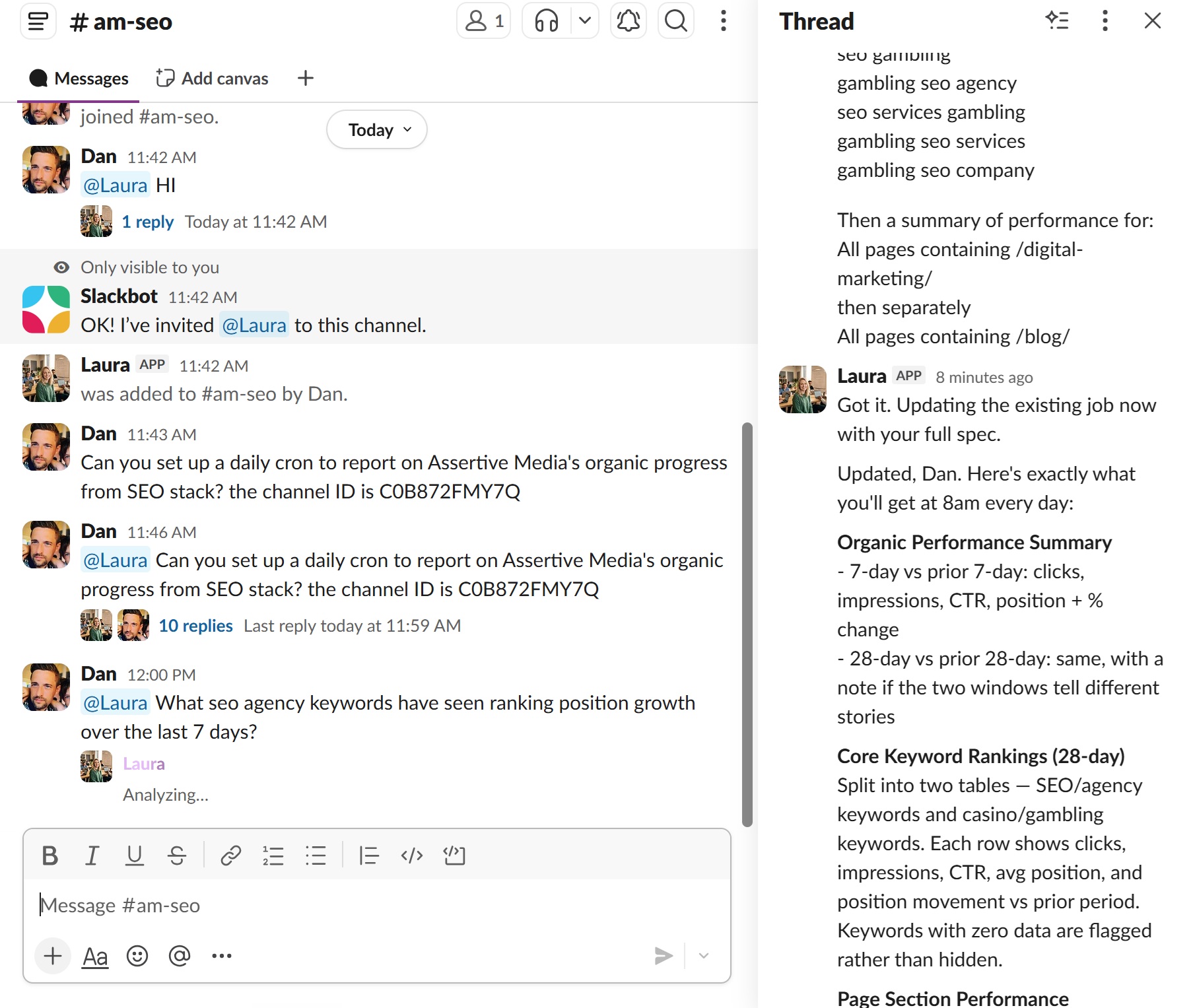
Configure a cron job to run your agent daily:
0 8 * * * /usr/bin/python3 /path/to/your/seo-agent.pyThis runs the analysis at 8 AM daily and sends you the report.
Essential Monitoring Features
Ranking Movement Analysis
Your agent should track:
- Daily position changes for target keywords
- New keywords entering top 100
- Keywords dropping out of top positions
- Significant movement patterns (gains/losses of 10+ positions)
Example alert: "Homepage ranking for 'SEO tools' dropped from position 12 to 23 yesterday. Traffic impact: -15% for this keyword."
Indexing Status Monitoring
Daily checks should include:
- Pages newly indexed by Google
- Pages removed from the index
- Crawl errors and accessibility issues
- Sitemap submission status
This catches technical issues before they impact rankings significantly.
Content Performance Tracking
Monitor your content portfolio:
- Pages gaining traffic and improving rankings
- Content experiencing traffic decay
- Seasonal performance patterns
- Pages that need content updates or optimization
Backlink Profile Analysis
Daily backlink monitoring:
- New referring domains and their quality scores
- Lost backlinks and their potential impact
- Spam score changes in your link profile
- Competitor backlink gains you might want to pursue
Advanced Features and Customization
Annotation Tracking
If you log SEO changes in SEO Stack, your agent can correlate these with performance changes:
"Title tag optimization on 2024-01-15 resulted in +12% CTR improvement for target page after 7 days."
This helps you understand which tactics work and which don't.
Competitive Intelligence
Expand your agent to monitor competitors:
- Their ranking changes for your target keywords
- New content they publish
- Backlinks they gain
- Technical changes to their sites
Custom Alert Thresholds
Set up intelligent alerting:
- Major ranking drops (>5 positions for important keywords)
- Indexing issues on key pages
- Significant traffic changes (+/- 20% week-over-week)
- New high-quality backlinks from relevant sites
Common Mistakes to Avoid
Over-Reliance on Automation
AI agents are excellent at data analysis but can miss context. Always review reports with your SEO knowledge and investigate anomalies manually.
Ignoring False Positives
Ranking tools sometimes show temporary fluctuations. Set minimum thresholds and time windows before treating changes as significant.
Poor Data Quality
Garbage in, garbage out. Ensure your Google Search Console data is clean and your tracking is properly configured before building automation on top.
Lack of Action Plans
Reports without action items become noise. Configure your agent to suggest specific next steps based on the data it finds.
Measuring Success and ROI
Track these metrics to justify your AI agent investment:
Time Savings
- Hours per week saved on manual analysis
- Faster issue detection and resolution
- Reduced time between SEO changes and impact measurement
Performance Improvements
- Issues caught and resolved faster
- Better correlation between SEO actions and results
- More consistent monitoring and analysis
Business Impact
- Organic traffic growth
- Improved ranking stability
- Better understanding of what SEO tactics work
Most users report saving 10-15 hours per week on SEO analysis while catching issues 3-5 days faster than manual monitoring.
Next Steps and Scaling
Once your basic agent is running, consider these expansions:
Multi-Site Management
Scale your agent to monitor multiple client sites or different business units.
Advanced Integrations
Connect to Google Analytics, social media APIs, and other marketing tools for comprehensive performance analysis.
Team Collaboration
Set up different report versions for different team members—technical alerts for developers, content insights for writers, strategic summaries for executives.
Predictive Analysis
Use historical data to predict ranking changes and identify optimization opportunities before competitors do.
Building an AI SEO agent takes about 15 minutes to set up initially, but the ongoing refinement and customization will make it increasingly valuable over time. Start simple, measure results, and gradually add features that provide the most value for your specific SEO workflow.
 Get the weekly SEO digest