 PocketSEO
Google's spam updates are targeting low-effort AI content — here's what to do

Daniel Foley Carter @foley_seo
Key Takeaway
Google's spam updates increasingly target AI-generated content that lacks original value or human editing. Using SBERT-style semantic analysis, Google can detect formulaic, repetitive machine-written articles at scale. To protect rankings, ensure AI-assisted content includes first-hand experience, original perspective, and genuine editorial input. Content that simply rephrases what already ranks is high-risk. Auditing thin AI posts, merging weak articles, and adding specific data or insights are the most direct ways to reduce exposure during and after spam update rollouts.
What does Google's spam update actually target?
Google's spam updates have become increasingly focused on AI-generated content that lacks meaningful human input. Sites pushing out high volumes of machine-written articles with little or no editing have seen sharp ranking drops — sometimes overnight. For many, that initial drop triggered a longer decay that didn't recover.
This isn't about AI content being automatically bad. It's about content that repeats what already exists, adds no original perspective, and shows no evidence of genuine effort.
How does Google detect AI-generated spam at scale?
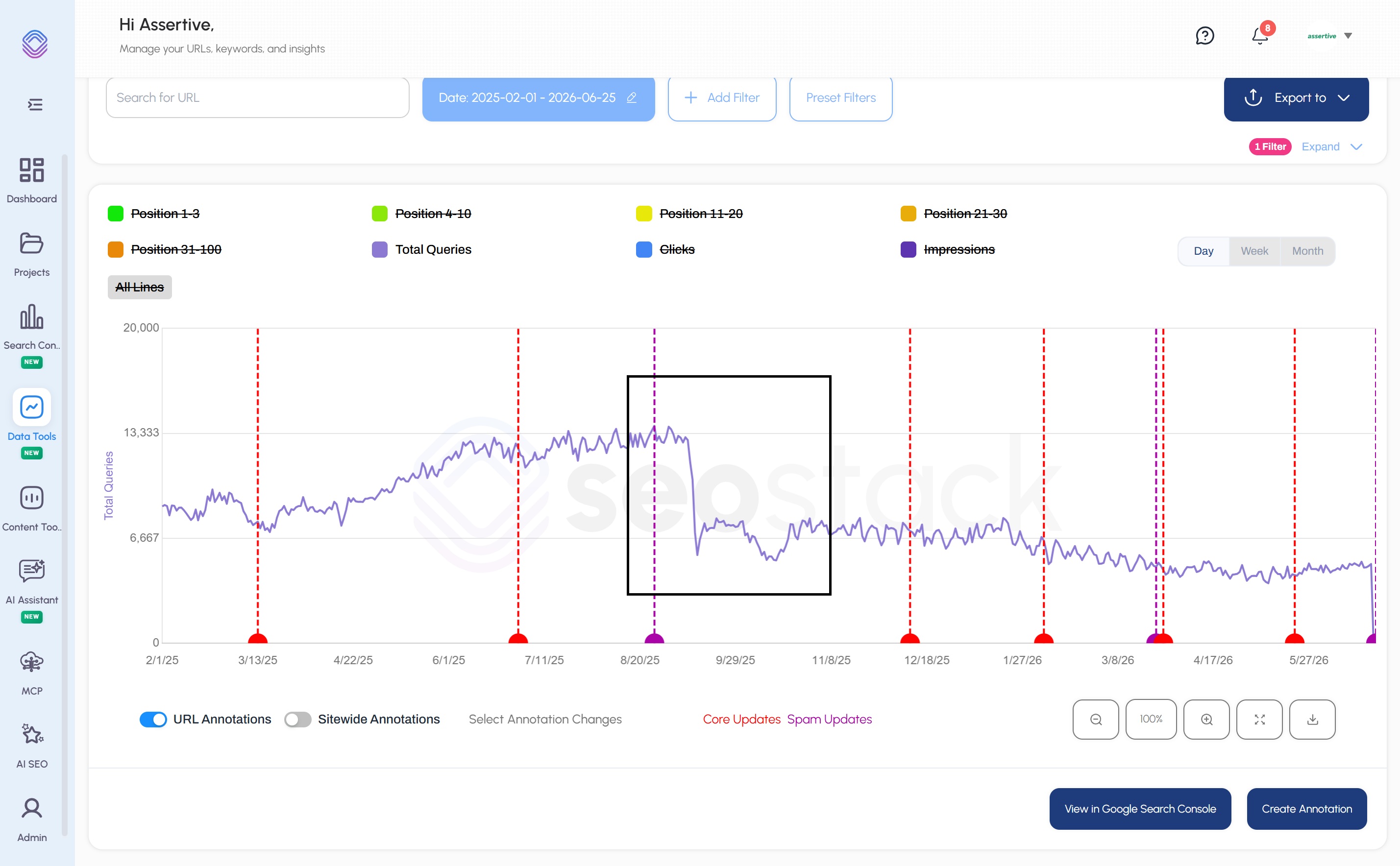
Google can apply SBERT (Sentence-BERT) within its ranking systems to identify formulaic or repetitive machine-generated content. Unlike word-level analysis, SBERT converts entire sentences into embeddings and measures semantic similarity across documents. That means Google can spot patterns in AI writing at scale — even when the individual article doesn't look obviously spammy.
According to Google's own Search Quality Rater Guidelines, content is evaluated on Experience, Expertise, Authoritativeness, and Trustworthiness (E-E-A-T). AI content that fails to demonstrate first-hand experience or unique expertise scores poorly on these dimensions regardless of how grammatically correct it reads.
What signals is Google rewarding instead?
Based on observable ranking patterns during recent spam update cycles, the content that holds or gains ground tends to share these traits:
- Original analysis or perspective — something the reader can't get from the top 10 results already ranking
- Demonstrated experience — first-person examples, case studies, data from your own work
- User engagement signals — low bounce rates, return visits, time-on-page (these suggest the content is actually useful)
- Editorial judgment — a human has shaped the argument, not just approved a draft
What should you do before the next update rolls through?
If you've been publishing AI content with minimal editing, here's a practical checklist:
- Audit your recent AI-assisted posts. Which ones have thin content that mirrors what's already ranking? These are highest risk.
- Add original value. Insert your own data, experience, or a take that differs from the existing results. A paragraph of genuine insight can separate a useful article from a templated one.
- Cut or consolidate low-effort pieces. Merging three weak posts into one strong one is better than leaving thin content indexed.
- Edit for voice and specificity. AI writing tends to be vague and generic. Concrete details, named sources, and specific numbers signal effort.
- Monitor Search Console. Watch impressions and clicks on your AI-assisted content over the two weeks following any confirmed spam update.
Is all AI content at risk?
No. AI-assisted content that goes through substantive human editing, adds original perspective, and genuinely helps the reader has held up fine through recent updates. The risk sits with content that is clearly mass-produced, repetitive, and derivative.
The distinction Google appears to draw is effort and originality — not the tools used to produce the content.
Want the full playbook? Read our guide on AI SEO Workflows That Move Rankings: A 2026 Field Guide.