 PocketSEO
Get Backlinks for Free with Broken Link Building

Hridoy Reh @hridoyreh
Reviewed Jul 2026
Key Takeaway
Broken link building is a free way to earn backlinks by finding dead links on relevant websites and offering your content as a replacement. Use the Chrome extension Check My Links to scan resource pages and blog posts in your niche, identify 404 errors, then email the site owner with the specific broken URL and your working alternative. Because you're solving a real problem for them, response rates are meaningfully higher than cold outreach asking for links with no context.
What is broken link building?
When a website links to a page that no longer exists, that's a broken link. The site owner has a problem: a bad user experience and a wasted link. You have a solution: a working page on the same topic. Broken link building is the process of finding those dead links and offering your content as the replacement.
It costs nothing but time, and it still works.
How do you find broken links at scale?
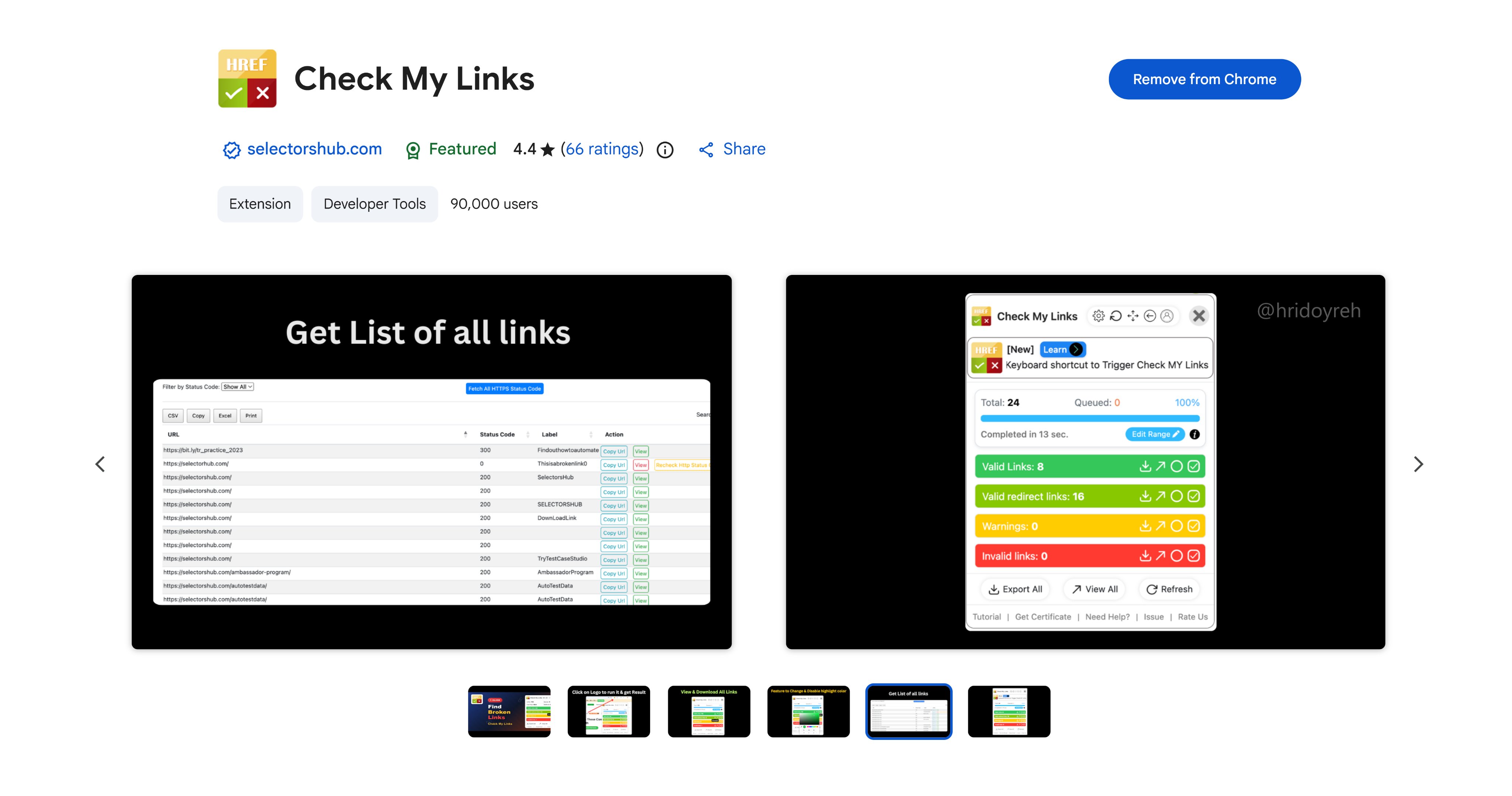
Start with the free Chrome extension Check My Links. It scans any page you visit and highlights every external link, flagging broken ones in red.
Here's the process step by step:
- Install Check My Links from the Chrome Web Store.
- Find resource pages, blog posts, or link roundups in your niche. Search Google for queries like
intitle:"resources" + your keywordorinurl:links + your keyword. - Open a target page and run Check My Links. It highlights dead links in seconds.
- Note the broken link URL and the anchor text used.
- Check whether you have a page that covers the same topic. If you don't, consider writing one before outreach.
- Email the site owner. Keep it short: mention the specific broken link, where it appears on their page, and suggest your URL as a replacement.
Why do site owners actually respond?
Because you're doing them a favor. A broken link hurts their site's credibility and visitor experience. You're not asking for a link out of nowhere — you're flagging a real problem and handing them a fix. That framing changes the whole dynamic of the outreach.
According to Ahrefs, at least 66.5% of links to sites over the past nine years are dead — link rot is widespread, so there's no shortage of broken-link targets in any niche.
What makes outreach convert?
A few things that separate replies from silence:
- Be specific. Name the exact URL that's broken, not just "I noticed some broken links on your site."
- Keep it short. Three to four sentences is enough. Site owners don't need a sales pitch.
- Match the content closely. If the dead link was to a guide on email marketing for restaurants, your replacement should cover that exact angle — not just email marketing generally.
- Follow up once. A single follow-up after five to seven days is fine. More than that and you're spam.
Is this worth the effort for a small site?
Yes, especially early on when you have few backlinks and no outreach relationships. One well-placed link from a relevant resource page can move the needle more than dozens of low-quality directory submissions.
The method scales, too. Once you've built a content library, you can run Check My Links across dozens of pages and batch your outreach. Pair it with a tool like Hunter.io to find contact emails quickly, and you have a repeatable system that costs nothing.
Want the full playbook? Read our guide on Image Backlinks: The Underrated Link-Building Play for 2026.